
I recorded this episode twice.
Not because I flubbed a line. Because somewhere between the first take and the second, I got scared of my own sentence.
The sentence is this: Last year, everything went dark. I couldn’t see.
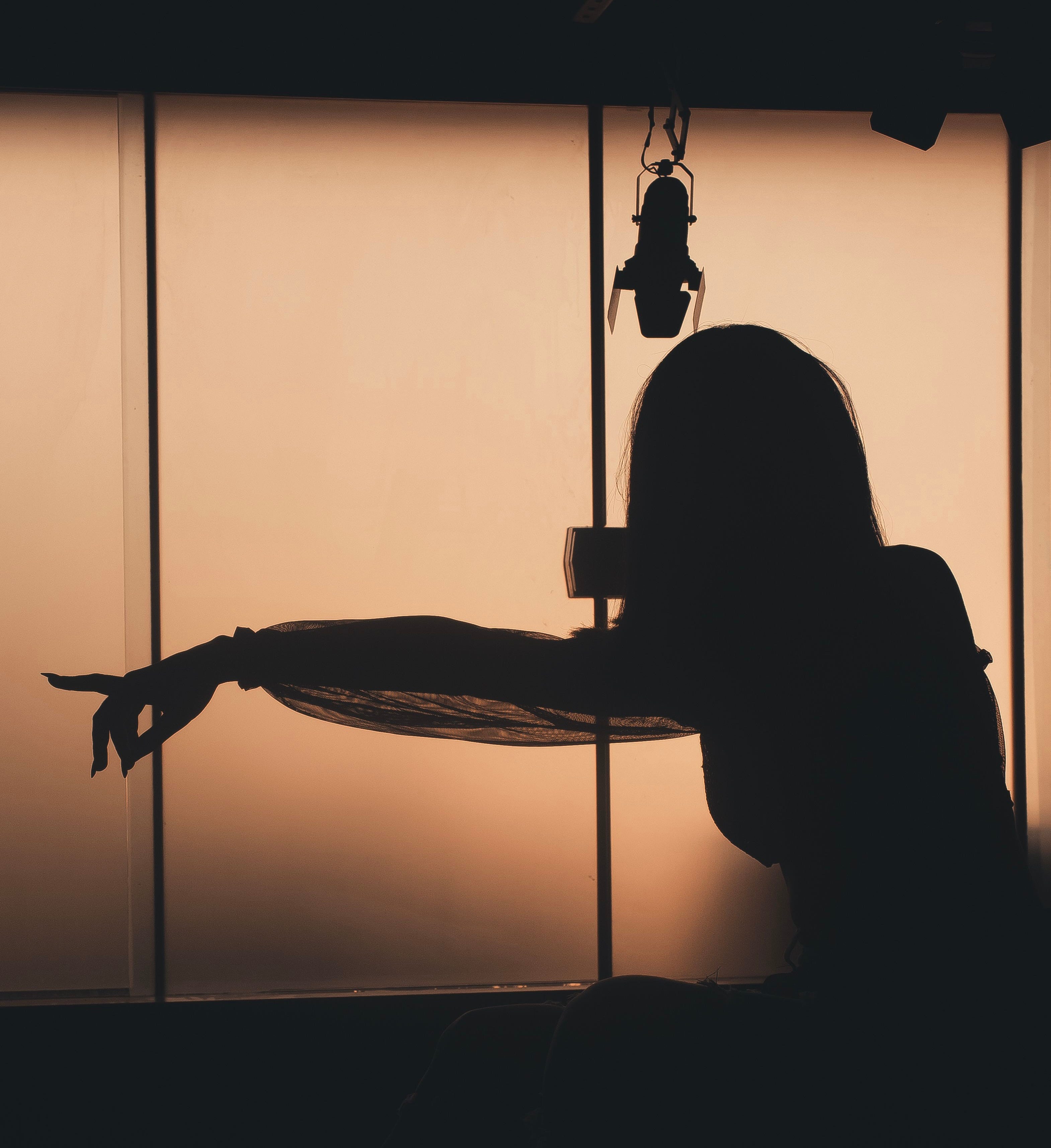
It’s true. It happened. I’ve said it in kitchens and in cars and to people I love. But saying it into a microphone is different. A microphone means it gets pressed onto a feed and played on someone’s commute, in someone’s kitchen, at two in the morning by someone who can’t sleep. Over and over, in rooms I’ll never stand in.
And I sat there with my finger over the button thinking: what if saying this out loud puts it back?
I know how that sounds.
The oldest superstition there is
Here’s what steadied me. That fear isn’t unhinged. It’s ancient.
Humans have always half-believed that naming a thing can summon it. We knock on wood. We say “don’t jinx it.” We refuse to say the word out loud in the hospital hallway. Whole languages have built polite little side-doors so you can refer to the terrible thing without actually calling it by name.
So when I felt that superstition rise up in me, I recognized it. It’s not a crack in my thinking. It’s a very old room I happened to be standing in.
But recognizing it didn’t answer the question. Because part of me still wondered: what if there’s something to it? What if there’s an energetic piece I don’t understand?
I’m not going to sit here and tell you there isn’t. I don’t know.
What I noticed instead
Here’s what I do know, and it’s the thing that got me back to the microphone.
I wasn’t speaking that sentence from fear.
I wasn’t sitting there broadcasting please don’t let it come back, please don’t let it come back. I was telling the story of someone who walked into the dark, refused a stranger’s certainty about her future, and chose to trust herself instead.
If any of it carries a charge, and maybe it does, I genuinely don’t know. Then that’s the charge it carries. Not I am afraid. But: I met that, and I’m still here.
That’s not summoning it back. That’s the receipt.
What I keep coming back to
This is the line, and I think it’s the whole answer.
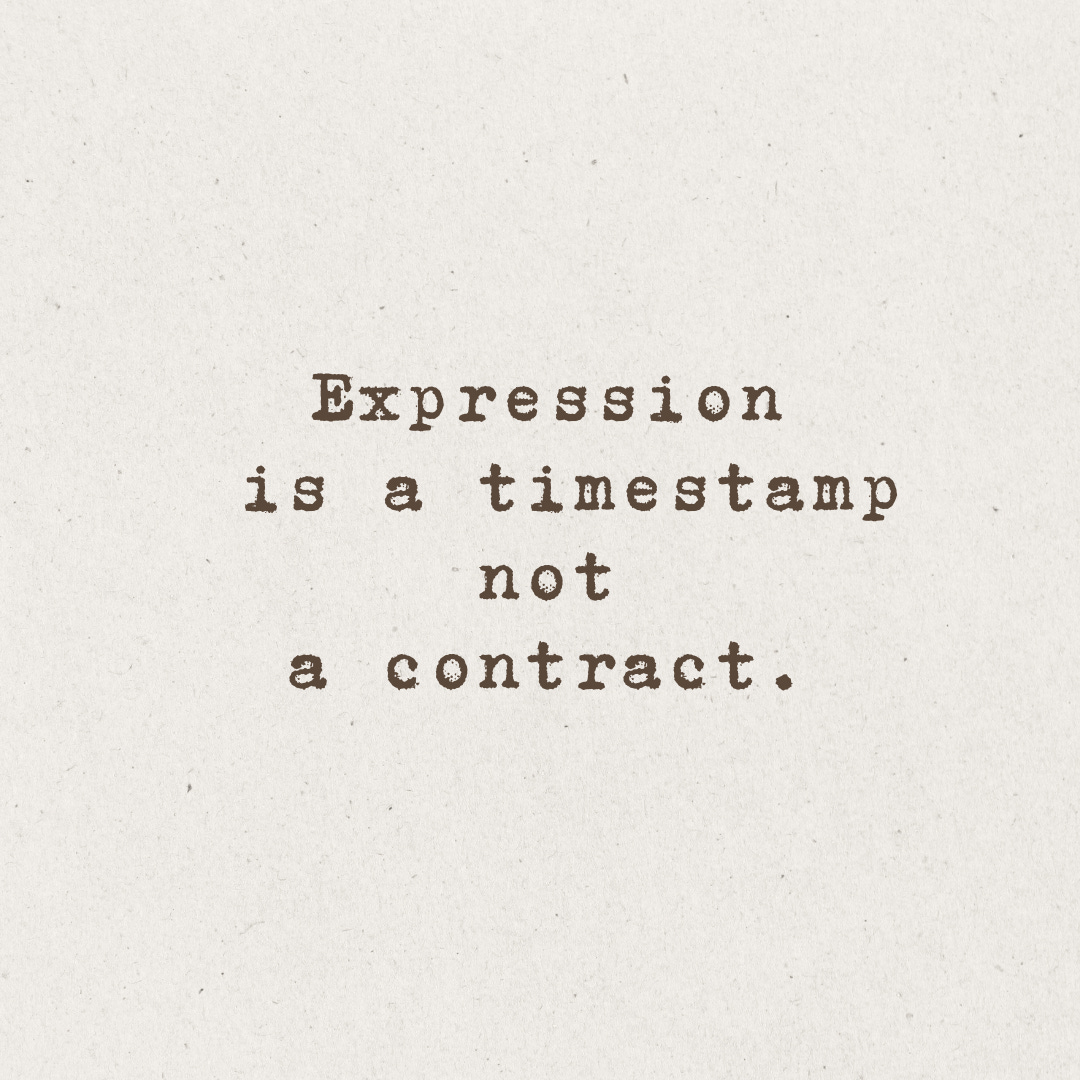
Expression is a timestamp, not a contract.
When I say a thing out loud, I’m not signing a deal. I’m not fixing it in place. I’m marking where I stood on the day I said it. That’s all a recording ever is. A photograph of a moment, not a lease on the future.
I don’t actually know how this ends for me. I’m being honest with you. Some of it is still open. I’m still living in the unknown. I made a whole episode about it, which is either very funny or exactly the point, depending on the day.
But not-knowing how it ends was never a reason not to speak. It’s just uncertainty. And I’ve spent a year learning that uncertainty is only unbearable when I don’t trust myself to meet whatever shows up.
What the fear was really asking
And then I noticed the last thing, the one that actually got me to press record.
Listen to what the fear was asking me to do.
Don’t say it. Keep it in. Stay quiet, stay safe, don’t put it out there where it could become real.
Stay certain. Stay small. Don’t walk in.
It’s the same voice. It’s the exact voice the episode is about. The one that trades the open field for a fence, as long as somebody hands you the fence.
I wasn’t going to make an entire episode about walking into the unknown and then let that voice edit it.
So I said it. And here it is.
Episode 5, “The Unknown Was Never the Problem” is above, or wherever you listen.
And if there’s something you’ve been circling but haven’t said out loud yet: I’d love to know what it is. Reply and tell me. I read every one.